How GamStop Self-Exclusion Works and What It Cannot Block
 Available in GB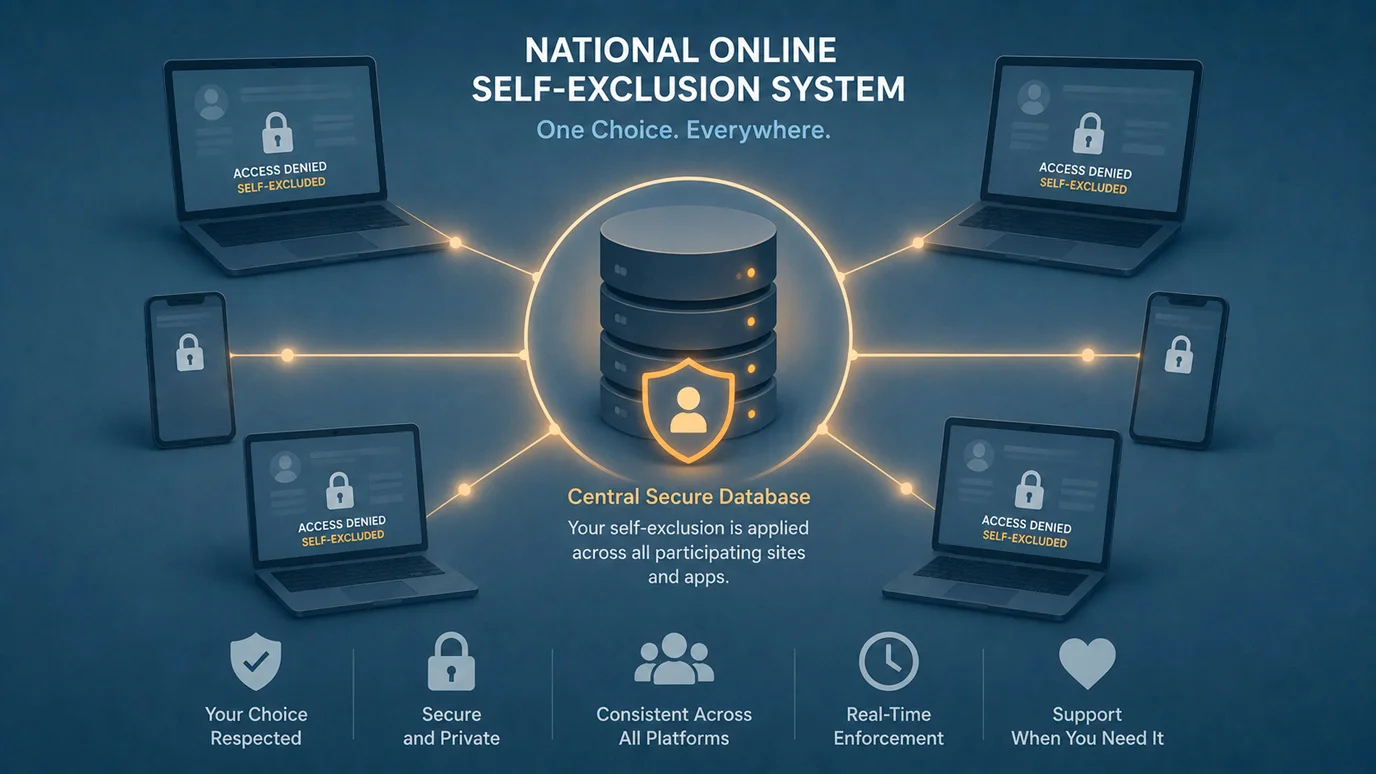
By Daniel Fairhurst, Gambling Regulation Analyst. . About 9 minutes to read.
GamStop is the national online self-exclusion scheme for Great Britain. In one step it lets you block yourself from every gambling operator that holds a UK Gambling Commission licence, for a period you choose.
The scheme launched in April 2018 and became a mandatory licence condition for UKGC-licensed online operators in 2020. By the end of 2025 around 562,000 people had an active registration, which is a little over 1% of UK adults.
This page walks through the mechanism in plain English: what GamStop is, the data it holds, the periods you can pick, and the precise limit on its reach that creates the entire “not on GamStop” category in the first place.
Table of Contents
- GamStop is one shared database that licensed operators must check
- Registrations have climbed sharply since 2018
- You hand over a small set of personal details to register
- You choose how long to lock yourself out
- The reach of GamStop is jurisdictional, not technical
- Several types of gambling fall outside the scheme entirely
- The block is only as good as the details you provide
- Tighter UK rules are part of why people look past the scheme
- If you need to talk to someone
GamStop is one shared database that licensed operators must check
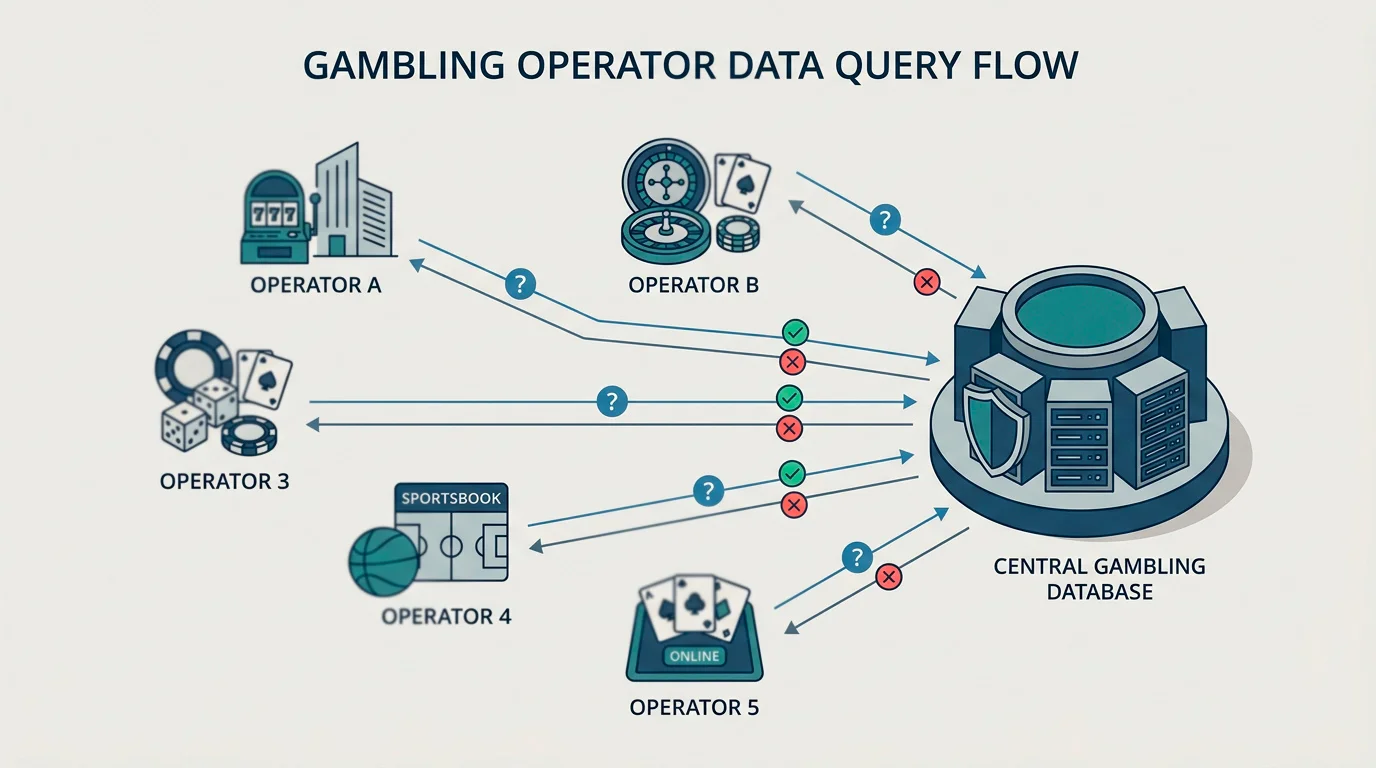
At its core, GamStop is a single central register. It is run by National Online Self-Exclusion Scheme Limited, known as NOSES and now presented publicly as the Gamstop Group, with Fiona Palmer as chief executive.
When you register, your details sit in that one database. Every online operator licensed in Great Britain is required to connect to it and check new and existing customers against the list in close to real time.
If your details match an active exclusion, the operator must stop you opening an account, block any account you already hold and remove you from its marketing. The point is that you sign up once, not operator by operator.
You can register free of charge through the official scheme at the GamStop website. There is no cost, and there never should be, so any site charging a fee to “add you to GamStop” is not the real thing.
Registrations have climbed sharply since 2018
GamStop is no longer a niche tool. From its launch in April 2018 it has grown into a register that more than half a million people rely on, and the pace picked up noticeably through 2025.
Roughly 562,000 people held an active registration by the end of 2025, with cumulative sign-ups since launch approaching 600,000. Registrations rose around a fifth over the year, and monthly highs of more than ten thousand were recorded in the spring.
The growth is not spread evenly. Take-up among adults aged 16 to 24 climbed fastest, and a sizeable share of all users opt for the five-year period rather than a short break. That pattern suggests many people are using the scheme as a firm boundary rather than a brief pause.
Those numbers matter for context. They show the scheme is widely used, but they also explain why a parallel market of sites outside the register has drawn attention, because every person who excludes is a person some offshore operators would still accept.
You hand over a small set of personal details to register
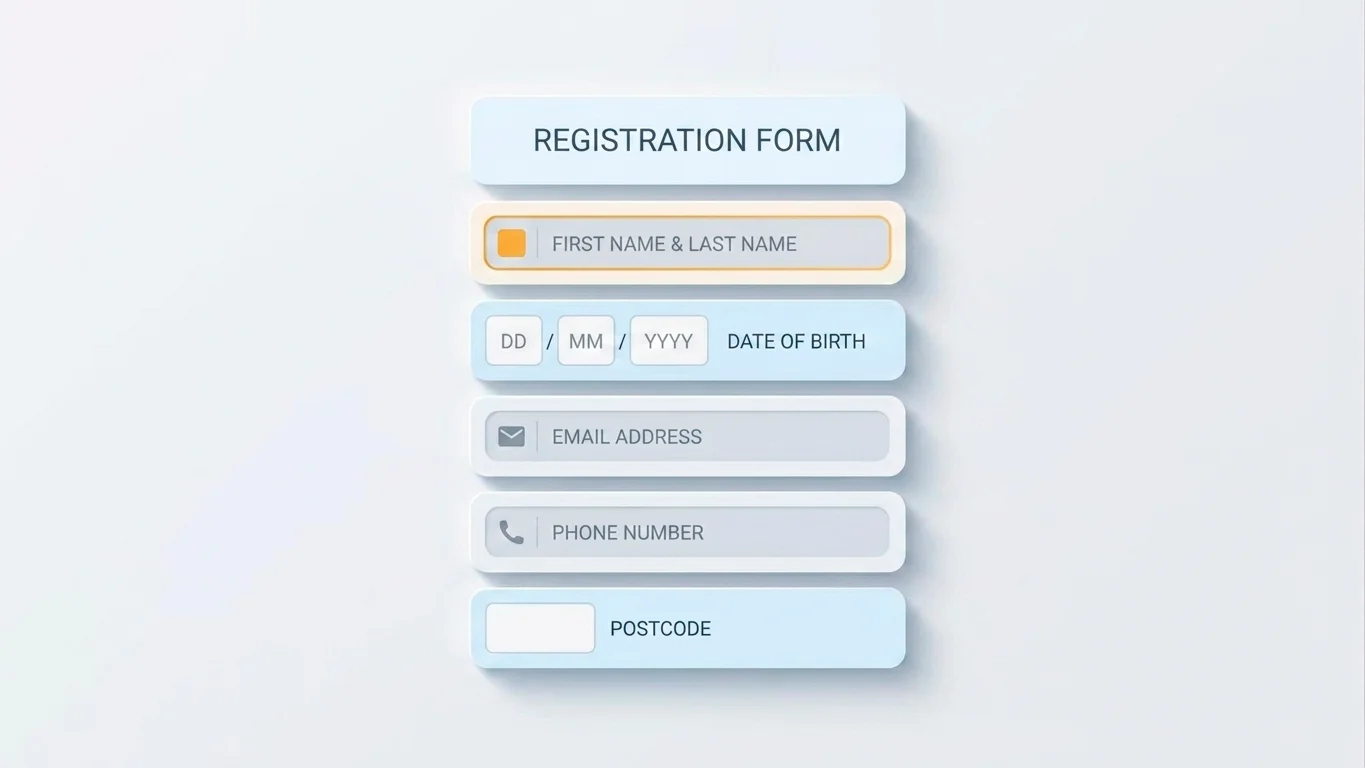
Registration is built around matching you reliably across many different operators. To do that, the scheme asks for a defined set of identifying details rather than anything financial.
Name and date of birth
The primary identifiers used to match your record against operator account data.
Email address and mobile number
Used to confirm your registration and to widen the matching net across accounts.
Home address and postcode
Added so that small variations in how your name is recorded are less likely to slip through.
You do not hand over bank details or card numbers to register, because GamStop blocks access rather than payments. That distinction matters later, when we look at what the scheme cannot reach.
It also shapes how you should treat the data. The scheme holds only what it needs to match you, and it is bound by UK data protection rules in how that information is stored and used. Keeping your record accurate is the single most useful thing you can do to make the block hold.
You choose how long to lock yourself out
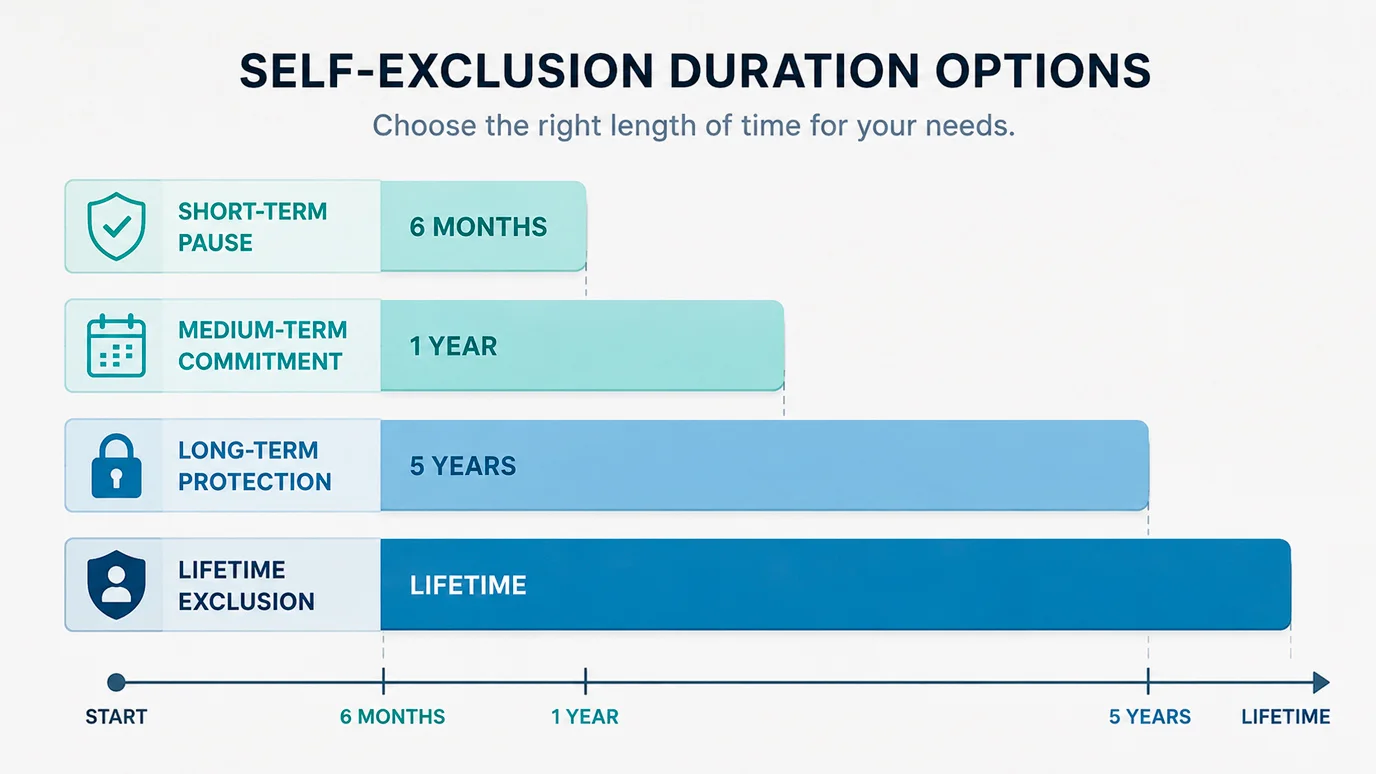
GamStop is not a single on-off switch. When you sign up you select a minimum exclusion period, and the operator block stays in force for that whole window.
- Six months
- One year
- Five years
- Five years with automatic renewal, added in December 2024 and treated by many as a de facto lifetime option
The longer options reflect how people actually use the scheme. Among registered users, a large share pick the five-year route, and uptake among younger adults grew sharply through 2025.
When you register, the block is not limited to one operator or one type of game. It applies across every UK-licensed online casino, slots site, bingo room and sportsbook at once, which is the practical strength of a single shared register. You do not have to remember which sites you hold accounts with.
The chosen period also resets your relationship with marketing. Operators must remove an excluded customer from promotional emails, texts and push notifications, so the constant nudge to come back quietens during the exclusion.
One feature trips people up: an exclusion cannot be lifted early. That design is deliberate, and it is the whole reason the scheme works as a commitment. If you want the detail on what happens when a period ends, read how to come off GamStop the right way.
The reach of GamStop is jurisdictional, not technical
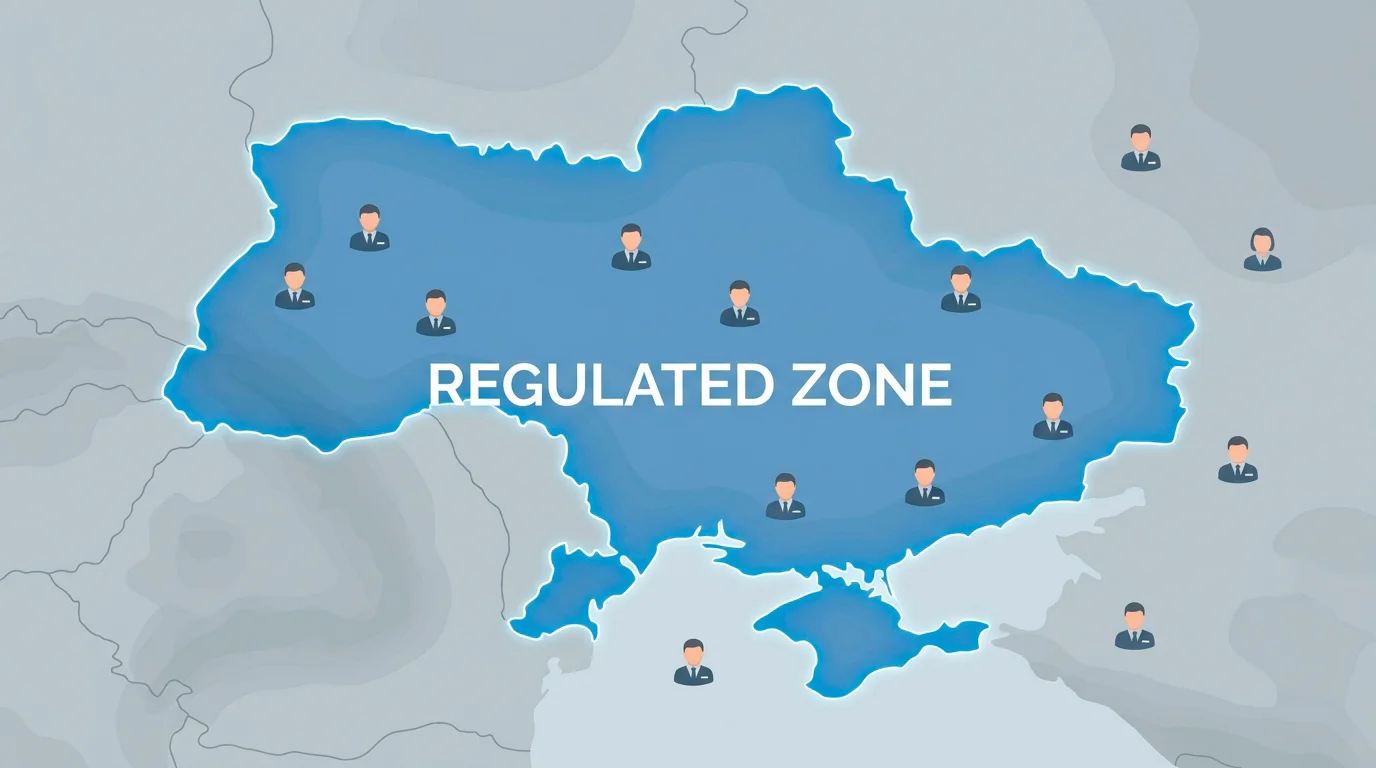
This is the single most important point on the page, and the one most guides skip. GamStop does not block gambling sites because of clever software. It blocks them because the operators are legally required to take part.
That requirement only applies to operators holding a Great Britain operating licence. The Gambling Commission, created by the Gambling Act 2005, makes participation in GamStop a condition of that licence. You can read the regulator’s own material on the UK Gambling Commission website.
So the boundary of GamStop is the boundary of UK licensing. An operator inside the system must check the register. An operator outside the system has no obligation to, and usually does not connect to it at all.
This is worth sitting with, because it reframes what “not on GamStop” actually means. It does not describe a casino that has found a loophole or beaten a filter. It describes a casino that was never inside the licensing regime that requires the check in the first place.
The same logic explains why a site cannot quietly half-join the scheme. Connection to the register travels with the UK licence, so an operator either holds that licence and checks every customer, or holds a foreign licence and does neither.
That is exactly why a casino that holds only an overseas licence sits outside the scheme. The mechanics are explained further in how offshore operators sit outside GamStop.
Several types of gambling fall outside the scheme entirely
Because the trigger is a UK online licence, anything outside that category is not covered. It helps to be specific about where the gaps are.
| Type of gambling | Covered by GamStop? |
|---|---|
| UKGC-licensed online casino, slots, bingo and betting | Yes, blocked for your chosen period |
| Offshore casinos holding only a foreign licence | No, no obligation to check the register |
| Land-based casinos and betting shops | No, these use separate schemes |
| The National Lottery | No, it sits outside the GamStop register |
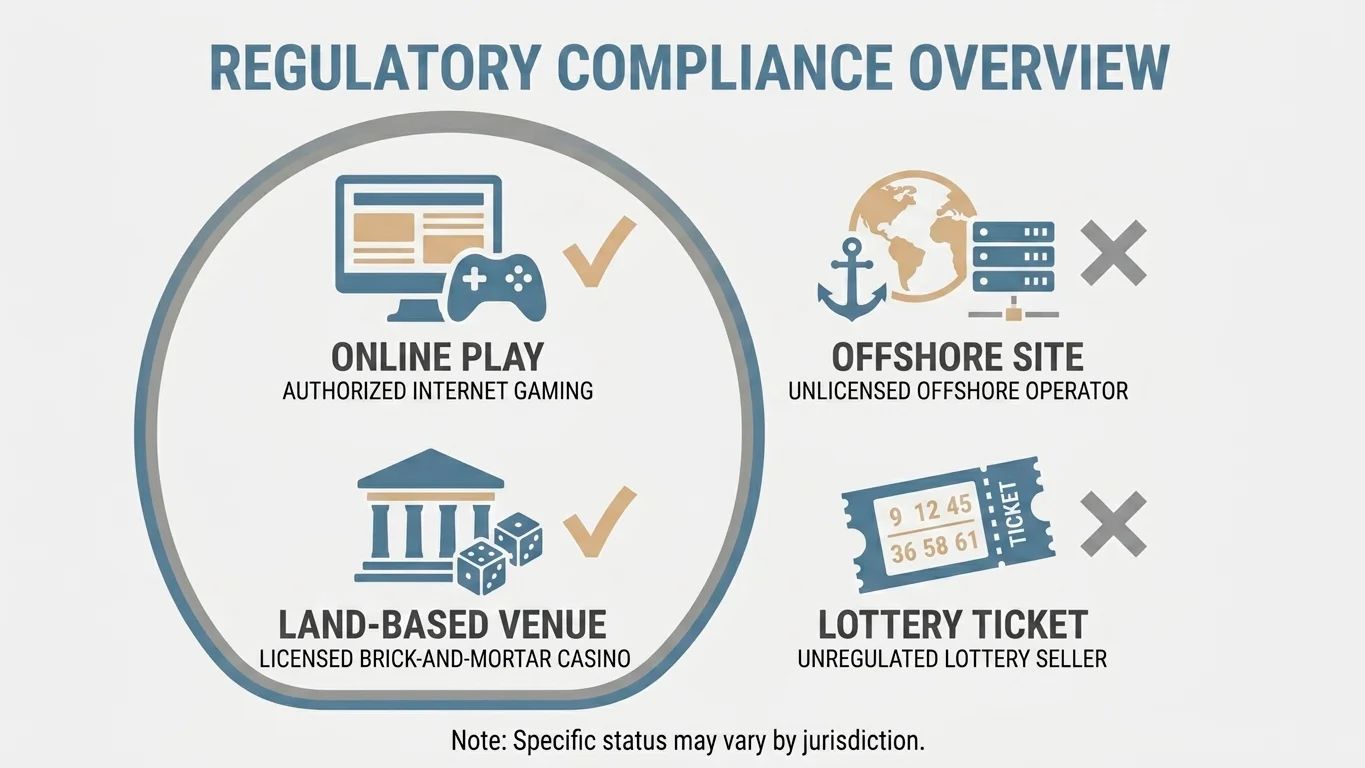
Land-based casinos run their own scheme, SENSE, and betting shops have their own arrangements, so a single GamStop sign-up does not cover the high street. That is why people who want a full break tend to layer several tools together.
The offshore gap is the one this site exists to explain honestly. A site with only an overseas licence is not breaking some technical lock; it simply never had to fit one. Whether that is legal for you as a player is covered in the legal status explained.
Does GamStop block the National Lottery?
No. The National Lottery operates under a separate licensing arrangement and is not part of the GamStop register, so a GamStop exclusion does not stop lottery play. People who want to cover that too need to use the lottery operator’s own self-exclusion options.
If I move house, does my exclusion still work?
Your exclusion stays active for the full period regardless of where you live, but matching relies on the details on file. Updating your address and contact details with the scheme keeps the block as reliable as possible.
The block is only as good as the details you provide
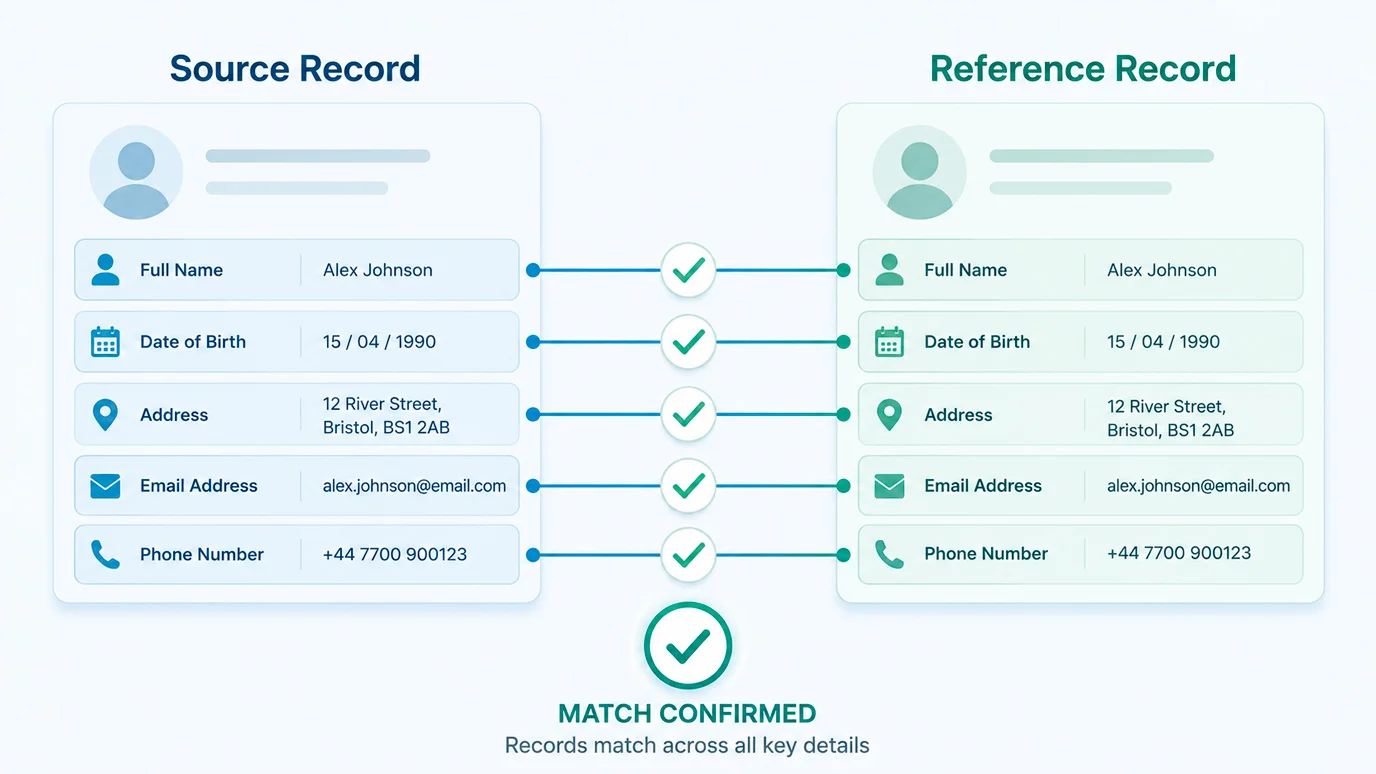
Matching across dozens of operators relies on the information you supply being accurate and consistent. A mistyped name or an old email weakens the net.
Operators are expected to match closely, but no register is flawless, and people who deliberately register with wrong details undermine the very protection they asked for. The practical takeaway is simple: register carefully, and keep your contact details current with the scheme.
It is also worth knowing that GamStop is a block on access, not a substitute for support. If gambling has become a problem, the scheme works best alongside other help rather than on its own.
Tighter UK rules are part of why people look past the scheme
GamStop did not appear in isolation. It is one piece of a much wider tightening of UK gambling rules that has accelerated since 2023, including new online slot stake limits and a near-doubling of operator gaming duty.
Those changes are pushing some players to look at sites outside the UK system, which is the demand this niche reflects. The drivers, and why they matter for protection rather than convenience, are set out in the 2025-26 reforms driving demand.
None of that changes the basic fact that leaving the UK system means leaving its safeguards behind. For the full picture, you can return to the casinos not on GamStop guide at any point.
If you need to talk to someone
Gambling should stay enjoyable and within your means. You must be 18 or over to gamble in the UK.
The National Gambling Helpline, operated by GamCare, is free, confidential and open 24/7 on 0808 8020 133, with live chat available through GamCare. You can also find information, tools and a service finder at BeGambleAware, and free self-exclusion from UK-licensed sites at GamStop.
The full picture is in our guide to casinos not on GamStop.
Ending an exclusion has one legitimate route: the official process.